

- Наши решения
- MDDC
- Карьера
- Ресурсный центр
 Back
Back
November 8, 2021
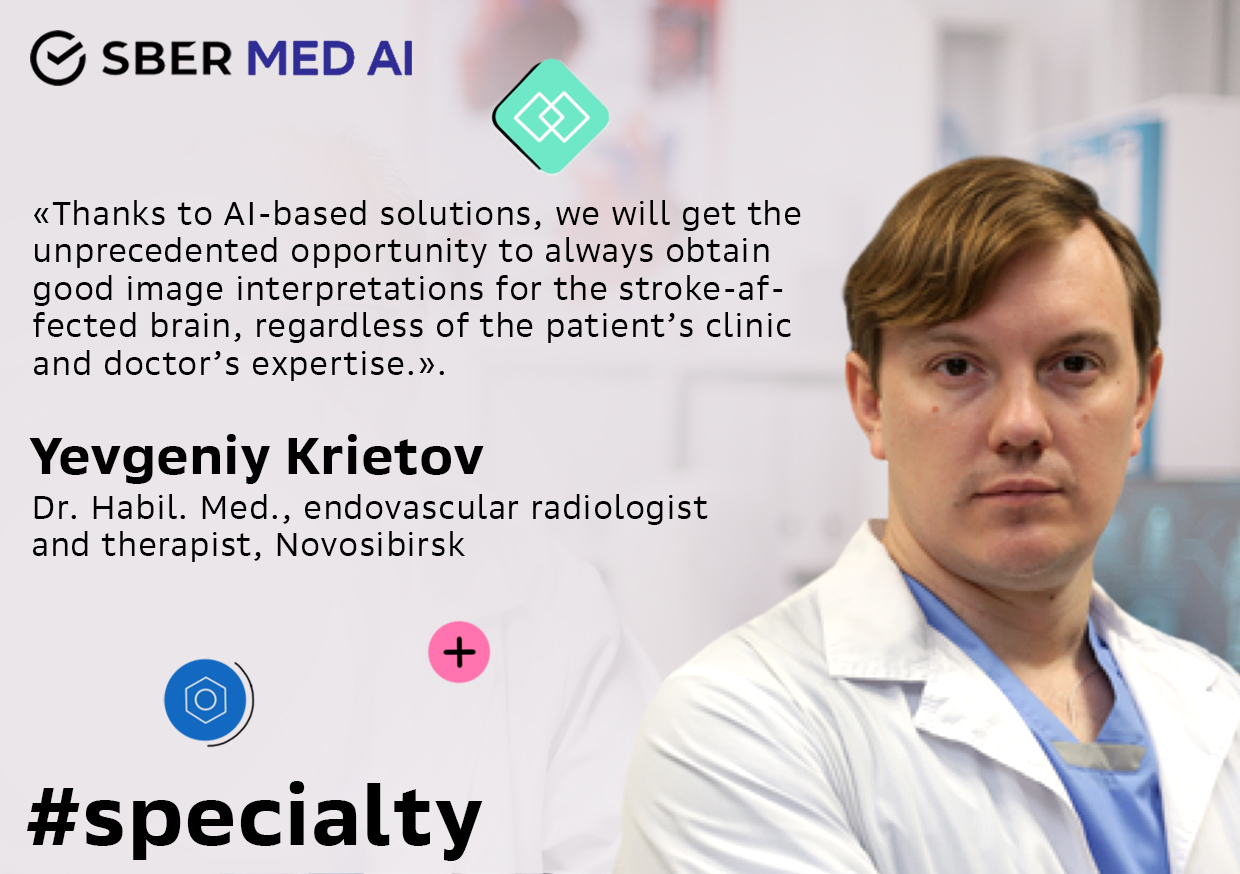
Today is the International Day of Radiology and we speak of the #specialty radiology with doctors who view quick and accurate diagnoses as the life work.
Meet Yevgeniy Krietov, Dr. Habil. Med., endovascular radiologist and therapist, cardiosurgeon, TsKB Regional Vascular Center, Novosibirsk.
We are delighted to cooperate with high-level experts, aiming to develop novel services that simplify tasks and save time for doctors, while assisting in correct diagnosing of patients. Thanks for the lives saved! We wish you good health and rewarding activities!
Yevgeniy, how did you come to your specialty?
When I studied at Novosibirsk Medical University, I was part of the shift team at the city hospital cardiology unit and saw a lot of severe after-effects of catastrophic strokes. Those days, there were neither powerful CT scanners, nor vascular centers, nor widely-available and low-invasive technologies to treat miocardial or cerebral infarctions.
My graduation was almost at the time when such technologies burst into the clinical practice. The majority of patients have finally got the chance to avoid post-stroke severe effects or even death. So I chose my life mission — to assist people in critical conditions related to miocardial or cerebral infarctions.
What do you see as the most important in your specialty?
Maximum speed and accuracy when making decisions.
What advantages do you get from using the CT Stroke service?
Many regions experience a lack of specialists, including CT radiologists. Meanwhile, CT can provide key data for determining correct treatment of strokes.
Interpreting brain images with suspected stroke is a very complicated process that requires to both determine and quantify the area affected. The CT Stroke service dramatically reduces the time needed to interpret imagery and in fact, it performs all calculations for the radiologist, while maintaining continuous accuracy and fastness of image processing.
What perspectives do you see in AI–based medical solutions?
Thanks to AI-based solutions, we will get the unprecedented opportunity to always obtain good image interpretations for the stroke-affected brain, regardless of the patient’s clinic and doctor’s expertise. For endovascular surgery of strokes, IT solutions provide the opportunity to have successful treatments with minimal complications, while patients get equal access to high-tech treatment.


