

- Наши решения
- MDDC
- Карьера
- Ресурсный центр
 Back
Back
March 8, 2022
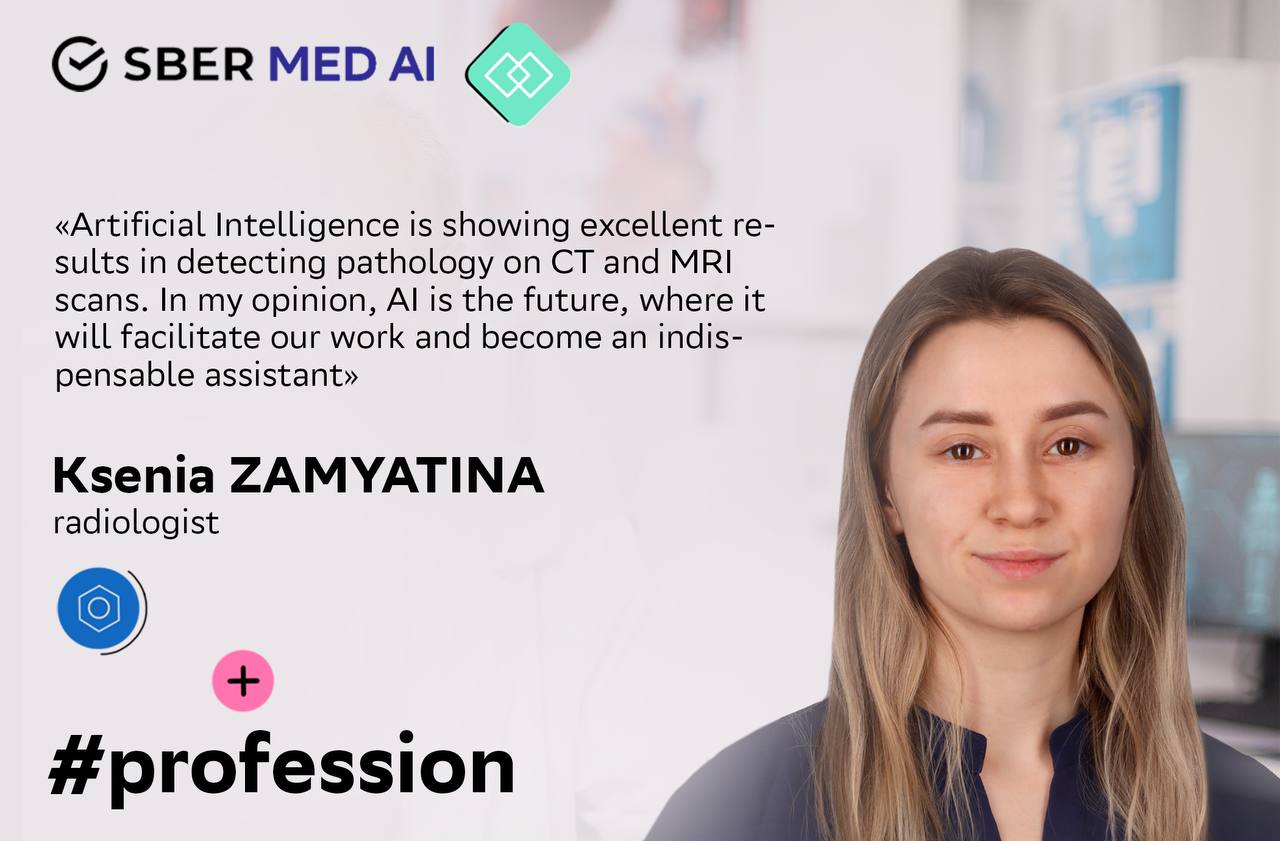
Meet Ksenia ZAMYATINA, radiologist, post-graduate, VK blog .
As early as in my third year at medical institute, I admired the possibility to look “through” the human body using CT and MRT imaging. In my fourth year, I frequently attended professional clubs and participated in knowledge contests in my professional field.
I graduated the Sechenov First Medical Institute with honors. Starting 2019, I was in residency training at Vishnevsky Institute of Surgery specialized in Radiology. In 2021, I entered the same institution for a post-graduate training program in X-ray Diagnostics.
I think it is impossible to learn only from textbooks and lectures. The most important is to see and carefully describe a large number of examinations and get feedback from doctors from other professional domains. At Vishnevsky Institute of Surgery I described at least 20 various examinations per day, from X-ray to CT and MRT, for me it became the best school and knowledge base.
In my view, a medical examination can not be seen separately from the patient’s medical history, therefore, every person needs a personal approach. It is important for a radiologist to know about both chronical illnesses, and acute conditions, as well as various methods of treatment, including surgical interventions. Speaking about deltas, in our work there can be technical failures: malfunctioning of a tomographic scanner or image viewing software. A plus for me is that a radiologist can work remotely describing the images from anywhere in the world.
I am proud, when I make the right diagnosis and help patients in complicated clinical cases. For example, there was a female patient with a suspected hepatic cancer based on ultrasound scan and CT. An oncological diagnosis is always frightful and needs a serious and a long treatment. I recommended the patient to undergo a special examination, an MRT scan with a hepatospecific contrasting, which shows whether the liver cells in the formation are normal or mutated, which is typical for cancer diseases. We did this exam and found out that the neoplasm was benign. The patient was recommended to do a control tests in a certain period of time. Further examinations showed that the neoplasm remained of the same size. This way, the patient avoided a complex surgery.


